
Composite/PVC vs. Wood Decking in Winnipeg: Which Passes the “Freeze-Thaw Test”?
Winnipeg homeowners know their decks must survive some of the toughest weather conditions in Canada. From deep winter freezes below -30°C to high humidity in summer, these decks experience constant expansion, contraction, and moisture exposure.
If you’re planning a new deck, choosing the right material matters. Let’s break down how each decking material performs when Winnipeg weather puts it to the test.
What Is the Freeze-Thaw Effect?
Freeze-thaw cycles occur when moisture seeps into a material, freezes as temperatures drop, and then expands. When the temperature rises again, the ice melts and the material contracts. In Winnipeg, this process happens repeatedly throughout late winter and early spring.
Wood Decking and Moisture
Wood decks have been popular for decades, but natural lumber reacts significantly to Manitoba’s extreme temperature swings. Because wood is porous, it absorbs water from snow accumulation, rain and snow melt and high humidity during Manitoba summers. When temperatures drop, that trapped moisture freezes and expands within the wood fibres.
Over multiple winters, this can cause several issues including:
- Cracking and splitting boards
- Surface checking and splintering
- Warping of deck boards
- Mold and rot
- Gradual weakening of structural integrity
Even pressure-treated lumber can experience these issues as sealing and staining eventually wear off, allowing moisture to penetrate again.
In a climate like Winnipeg’s, wood decks often require regular sanding, sealing, and board replacement to stay in good condition.
Low-Maintenance Composite and PVC Decking
Composite decking is engineered using a blend of organic materials such as wood fibres and recycled plastic, which gives the look of real wood while significantly reducing moisture absorption. PVC decking is made entirely of polyvinyl chloride, a synthetic plastic, and contains no organic materials. These low-maintenance decking products are specifically designed for climates where weather conditions change rapidly.
For Winnipeg homeowners, this means:
- No cracking or splitting
- Greater stability in extreme temperature swings
- Longer lifespan with fewer structural issues
Low-Maintenance vs Wood Decking in Winnipeg
Maintenance is another major difference between decking materials. While wood decks can certainly perform well when properly maintained, Winnipeg’s freeze-thaw conditions mean maintenance is an ongoing commitment, requiring regular staining or sealing and replacing cracked or warped boards.
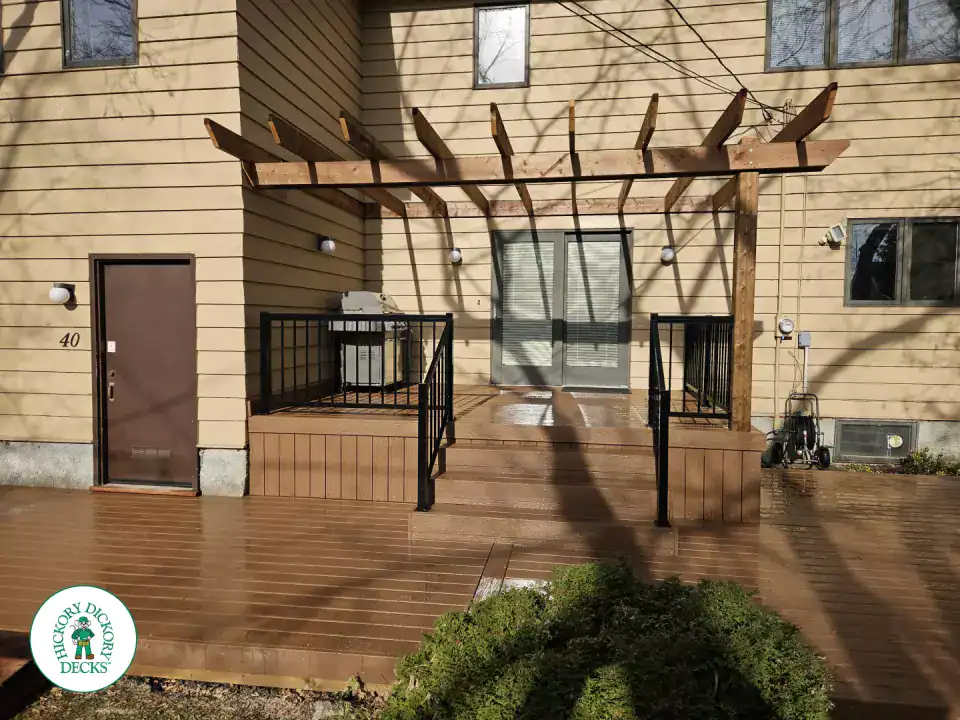
Composite and PVC decking offers a more durable solution for homeowners who want a deck that holds up year after year without constant upkeep. A simple soap and water wash once or twice a year is all you need to keep these decks looking great.
Low-Maintenance Decking: Built to Handle the Realities of Manitoba Weather
While wood decking has its place, when it comes to passing Winnipeg’s “freeze-thaw test,” low-maintenance decking comes out ahead.
For homeowners looking for long-term durability, lower maintenance, and reliable performance through harsh winters and wet springs, composite and PVC decking provide a practical and lasting solution for outdoor living in Winnipeg.
With the right materials and professional installation, your deck can withstand Manitoba’s harsh winters and remain a beautiful outdoor space for many years to come.
Contact your local Hickory Dickory Decks deck builder in Winnipeg for more information.