
How Much Does It Cost to Build a Deck in Winnipeg?
When thinking about building a deck, one of the first questions you’ll ask is: “How much will it cost?” The honest answer is: it depends. Because every project is unique, pricing isn’t as simple as multiplying square footage by a standard rate.
That said, most professionally built decks generally fall between $50 and $200 per square foot, depending on materials, height, foundation type, and design features.
Why is the pricing range so wide? Let’s break it down.
The “Square Foot Price” Myth
Many homeowners search online, hoping to find a simple price per square foot for a deck. The reality is that two decks of the same size can cost dramatically different amounts depending on a number of factors, including:
- Substructures: These are typically pressure-treated wood, but they could also be steel or plastic framing systems.
- Footings: could be traditional concrete piers or modern helical screw piles.
- Deck boards: could be pressure treated, cedar, composite or PVC.
- Railings: might be wood, aluminum, vinyl, glass, or custom laser-cut panels.
Then there are additional features that can change the price of your custom deck, including:
- Privacy walls
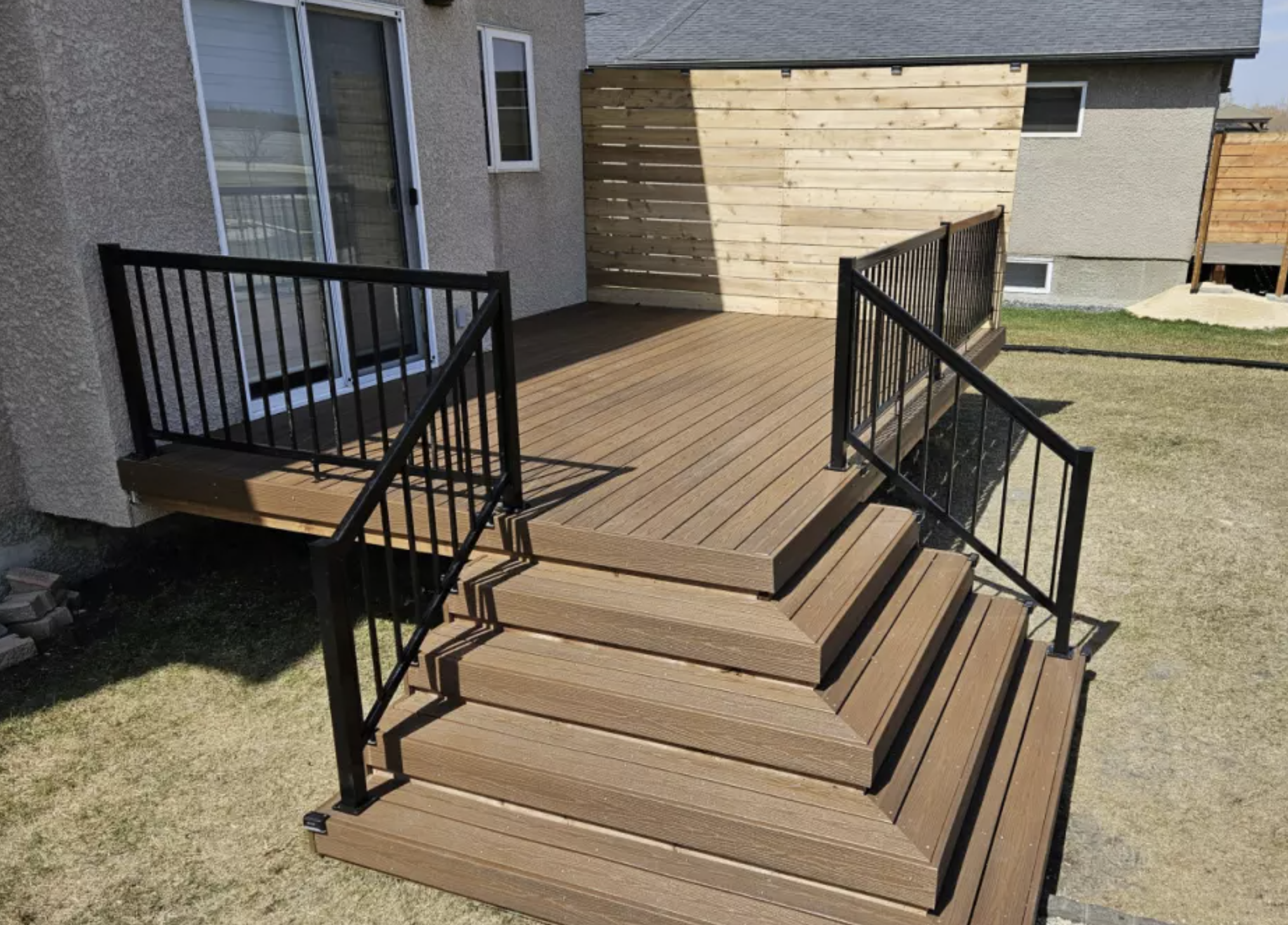
- Stairs
- Multi-level designs
- Deck skirting
- Lighting
- Built-in planters or benches
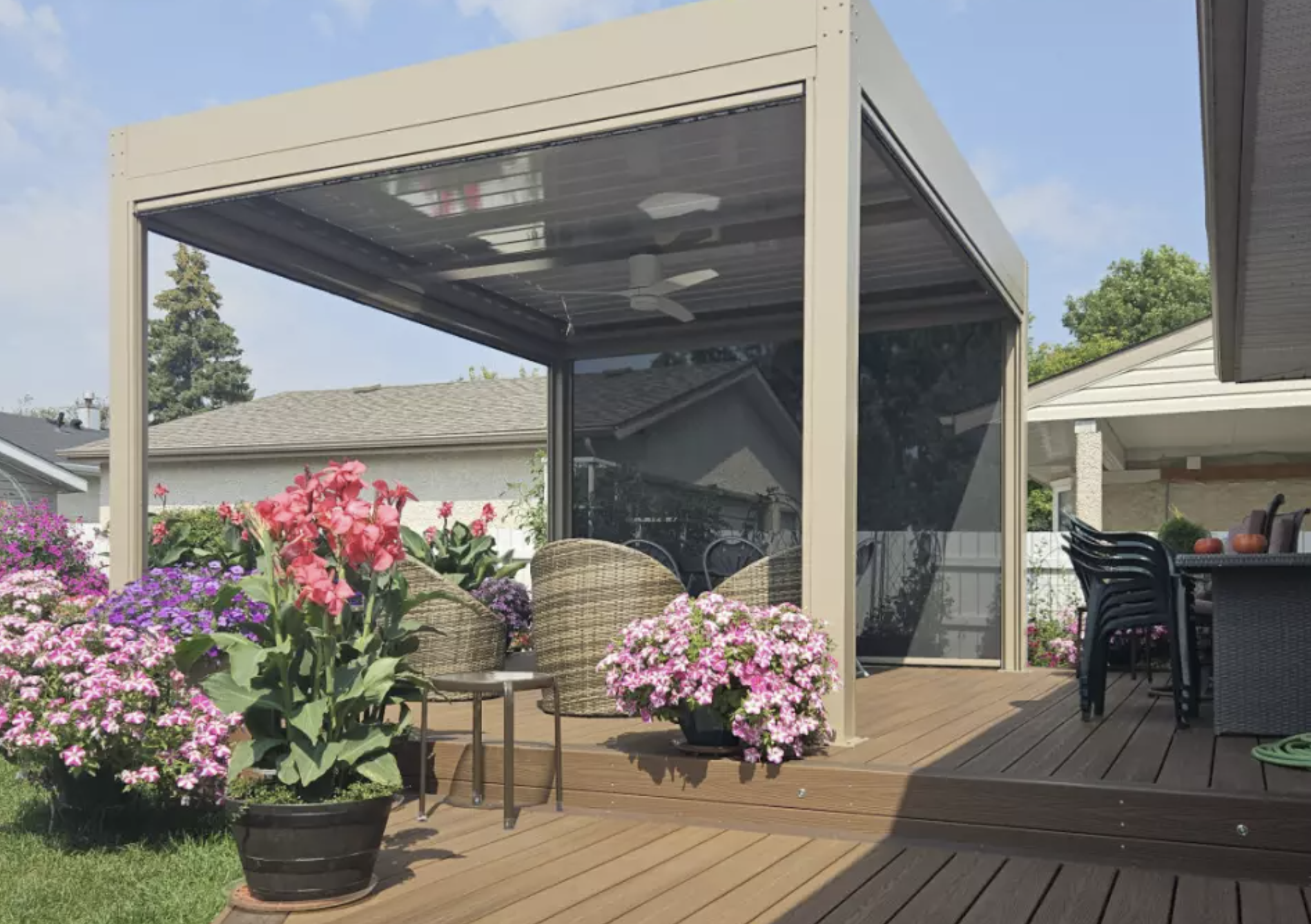
- Shade structures like awnings, pergolas, gazebos, or roofs
A simple 200-square-foot platform deck and a two-storey walk-out deck with stairs, glass railings, and composite boards may be the same size, but the cost difference could be tens of thousands of dollars. That’s why accurate pricing almost always requires an on-site estimate.
Major Factors That Affect Deck Cost in Winnipeg
1. Material Choice: The Price Gap Between PT, Cedar, and Composite
The biggest factor in deck pricing is the decking material itself.
- Pressure Treated Wood: This is the most affordable option and is widely used in Manitoba. However, wood requires regular staining and maintenance to protect it from moisture and weather and has a life span of typically 10 years, which means higher replacement costs long term.
- Cedar: Cedar offers a beautiful natural look and resists rot naturally, but it still requires maintenance to keep its colour and has a shorter life span than other decking materials, such as composite and PVC.
- Low-Maintenance Decking: Composite and PVC decking may have a higher upfront cost, but they offer several long-term advantages. These materials are designed to resist moisture, rot and insects, which helps them last significantly longer than traditional wood decking. They also require very little upkeep – no sanding, staining or sealing and are more durable than wood, lasting significantly longer than wood.
There is still a wide price range within low-maintenance decking, from entry-level composite boards to premium capped composite or PVC boards. Higher-end options typically offer longer warranties and more realistic wood-grain finishes.
2. The Foundation: Why Screw Piles Add Upfront Cost (But Save Money Later)
Every deck needs a solid foundation to support it—especially in Winnipeg’s climate. Winnipeg has deep frost levels, which means deck footings must extend below the frost line to prevent shifting. Each option has pros and cons.
While concrete footings have a lower upfront cost, they have some downsides:
- Require more labour for digging and pouring concrete
- Must wait for the concrete to cure before building
- Can crack or shift with soil movement
- Frost can lift them in cold climates, causing the deck to shift
Helical screw piles, on the other hand, may have a higher upfront cost, but also offer
- Minimal landscaping disturbance
- Anchored beneath the frost line, reducing the possibility of movement and resulting in a more stable deck
- Ready to build on immediately
While screw piles may cost more initially, they often save money in the long run by reducing the risk of shifting or settling—something Winnipeg homeowners deal with frequently due to soil movement and freeze-thaw cycles.
3. Elevation and Stairs: Why High Decks Cost More
A deck height of around 13–16 inches is often the most cost-effective option. At this height, you typically won’t need a beam-supported frame, and the cost for skirting and steps is minimal. In many cases, railings aren’t required either, which helps keep costs down.
Elevated or multi-level decks tend to increase the overall budget. Higher decks require more labour time—since building involves working up and down ladders—as well as added features like railings for safety, plus stairs and landings.
Why Decks Are a Great Investment in Winnipeg
A deck isn’t just a backyard feature—it’s an extension of your living space and an investment that can significantly increase the resale value of your home. Many buyers actively look for homes with finished outdoor spaces, especially newer composite decks. A well-designed deck can:
- Expand entertaining space
- Improve backyard functionality
- Increase curb appeal
- Boost resale value
The Best Way to Get an Accurate Deck Price
Because every project is different, the best way to understand the cost of your deck is to get a professional estimate. Contact your local Hickory Dickory Decks owner in Winnipeg for a personalized quote tailored to your yard, home, and lifestyle.