
Screw Piles vs Concrete Piers: Which Deck Foundation Is Best for Long-Term Stability?
A strong foundation is key to keeping your deck safe, stable and looking great for years to come. Your deck’s foundation plays a big role in how your deck stands up to everyday use and seasonal temperature shifts. When it comes to choosing the right deck foundation, there are two popular options: concrete piers (sonotubes) and screw piles (also called helical piles).
Why Deck Foundations Matter
Decks are constantly exposed to the elements. Freeze-thaw cycles and moisture fluctuations cause soil to expand, contract, settle, or shift. If a foundation isn’t properly designed or installed, this soil movement can cause foundations to shift or crack, leading to uneven surfaces, structural stress, or long-term damage.
Concrete Piers: The Traditional Foundation
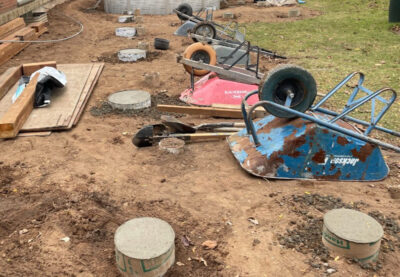 Concrete piers are a traditional and widely used deck foundation method. The process involves digging holes below the frost line (typically around 4 feet), inserting form tubes, and pouring concrete to support deck posts.
Pros of Concrete Piers
- Time-tested method: Concrete piers have been used in residential construction for decades and remains a familiar, trusted option.
- Lower Material Cost: Concrete itself is relatively inexpensive, which can make this option appealing for smaller projects or straightforward soil conditions, however there is an added cost for labour and soil removal.
- No specialized installer required: Concrete piers can be installed by general contractors while helical piles require specialized machines and certified installers which can limit contractor options.
Cons of Concrete Piers
- More vulnerable to ground movement: Concrete can be affected by soil expansion and freeze-thaw cycles. When moisture freezes in the soil, it can cause shifting, cracking or lifting over time.
- Labour-intensive: Concrete piers require digging, soil removal, forming and pouring.
- Disruptive to existing landscaping: Digging large holes for concrete piers can cause disruption to lawns, gardens and existing landscaping and requires removing large amounts of soil.
- Curing delays: Concrete needs time to cure which can slow down project timelines compared to screw piles which can be used immediately.
- Weather limitations: Cold, wet, or unpredictable weather can delay installation.
Screw Piles (Helical Piles)
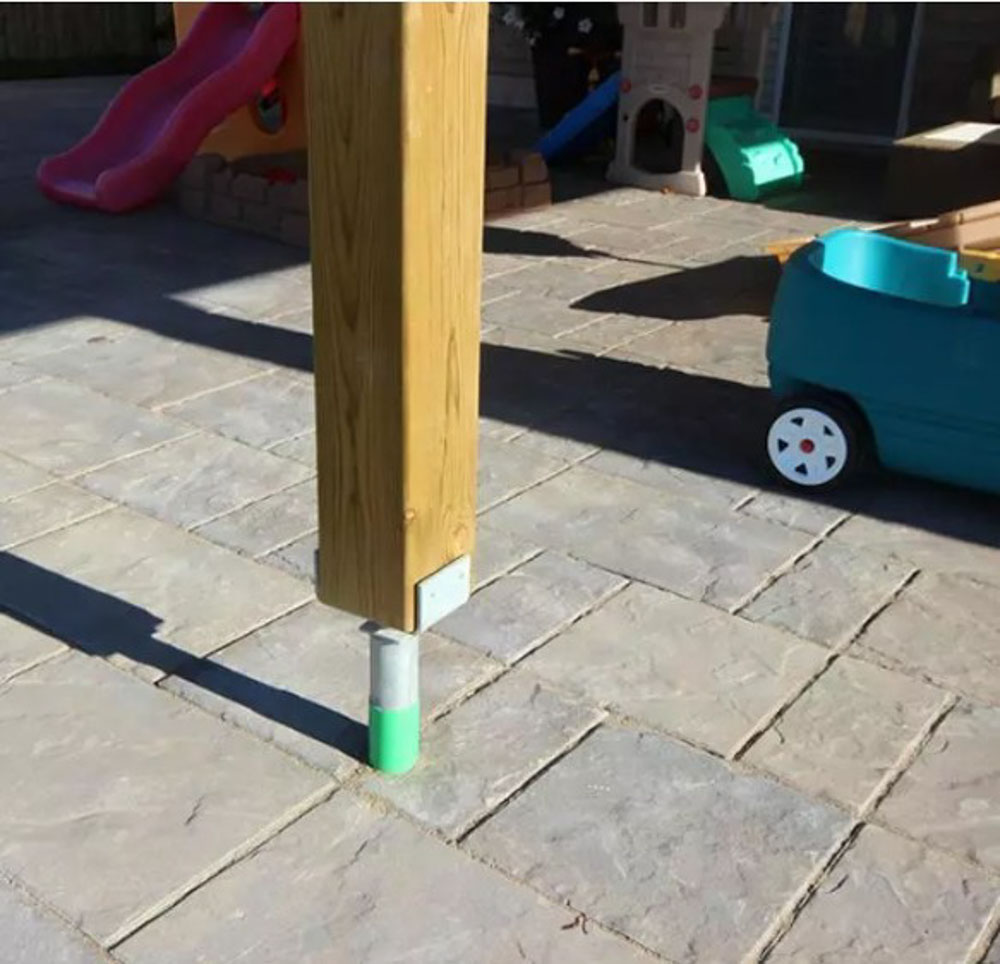
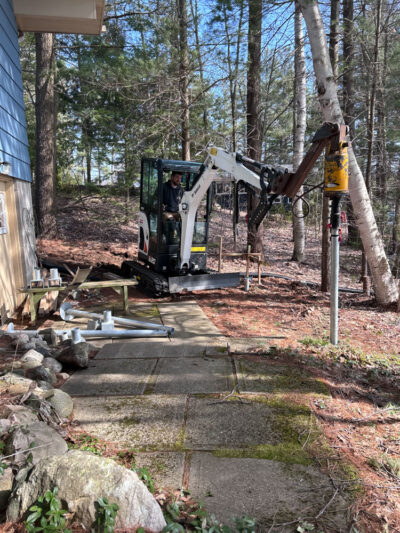 Screw piles, also known as helical piles, are driven deep into the ground using hydraulic equipment. They are installed below the frost line into stable soil to ensure long-term support. During installation, torque readings are used to confirm that the piles have reached solid bearing ground, allowing for reliable performance and warranty against movement.
Pros of Screw Piles:
- More resistant to soil movement: Screw piles are engineered to resist both uplift and settlement, making them an ideal foundation solution for elevated and multi-level decks.
- Fast installation: While concrete footings require digging holes, pouring concrete and waiting for it to cure before construction can begin, screw piles can typically be installed in a matter of hours, meaning deck construction may begin the same day.
- Minimal site disruption: Screw piles are screwed into the ground with a machine. There’s little excavation required, meaning less mess and less damage to landscaping.
- Year-round installation: Unlike concrete, screw piles can be installed even in colder temperatures.
- Lifespan and Durability: Screw piles are made from galvanized steel and are designed to resist corrosion and provide long-term structural stability.
Cons of Screw Piles
- Upfront cost may be higher: Screw piles require steel piles and specialized installation equipment, which may increase upfront costs.
- Specialized machinery is required: Not all deck builders are able to install screw piles as it requires specialized equipment.
Why Choose Screw Piles:
Screw piles (or Helical piles) are often the best option for:
- Elevated decks or large, multi-level decks
- Properties with sloped yards or poor soil conditions (clay, soft, or sandy)
- Properties with freeze-thaw climates where temperature shifts occur
- Deck builds with fast completion timelines
- Homeowners who prioritize long-term durability
Both concrete piers and screw piles can provide a solid base for your deck when installed properly.
Concrete piers still remain a practical option for simpler projects, especially where ground conditions are stable and timelines are flexible. However, screw piles are becoming increasingly popular due to their speed, reduced site disruption, and strong performance in a variety of soil conditions.
If you’re thinking long-term and want a foundation you don’t have to worry about down the road, screw piles are often the best choice for lasting stability and peace of mind.