
Choosing the Best Deck Materials for a Muskoka Property
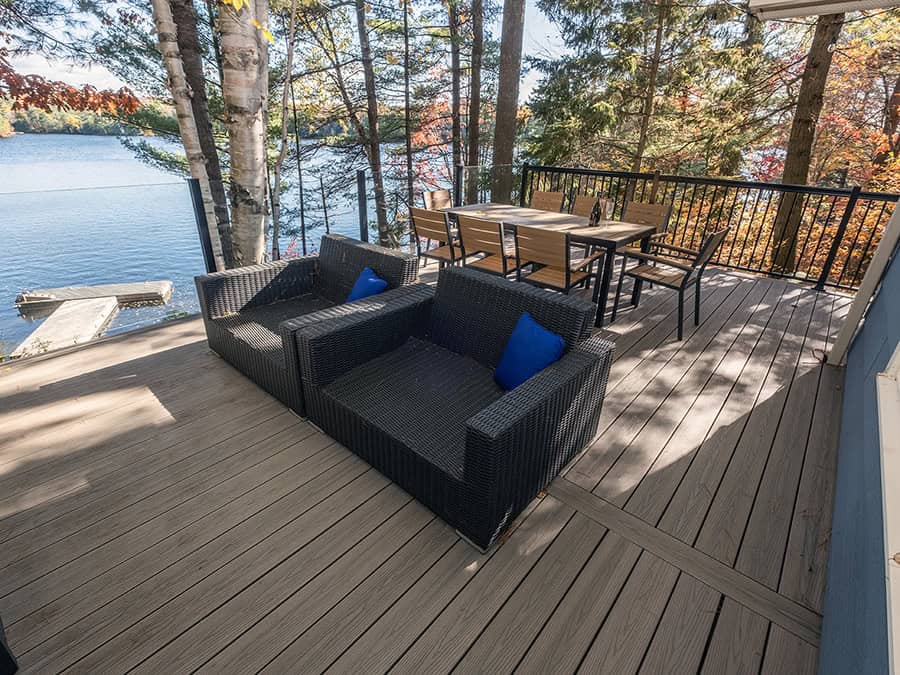
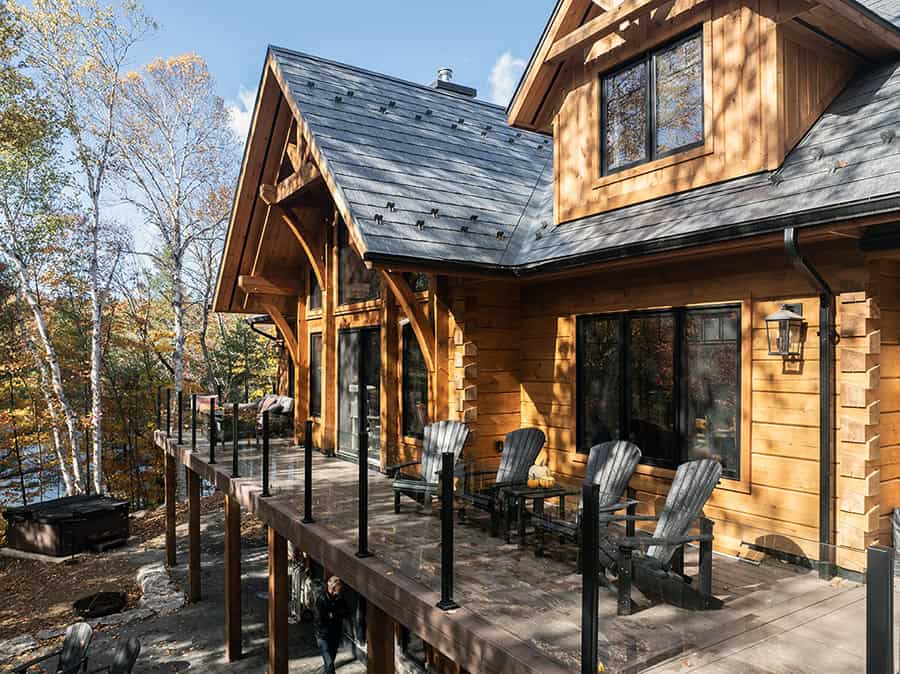
A cottage deck is more than just a place to sit—it becomes the main outdoor living space for summer entertaining, relaxing, and enjoying lake views.
Cottages in Muskoka or other lakefront regions in Ontario are often exposed to conditions that are different from typical suburban backyards. These homes face harsh winters, heavy snow loads, and lake humidity. Cottage homes also face months without maintenance, making choosing the right decking material crucial.
The two most reliable modern decking materials recommended for waterfront cottage homes are composite and PVC decking. Both are designed to outperform traditional wood in moisture resistance and longevity.
Why Deck Material Matters More at a Cottage
Cottage decks experience unique stresses:
- Heavy snowfall and ice buildup during winter
- Freeze-thaw cycles that cause materials to expand and contract
- Constant moisture from lakes, humidity, and rain
- Limited maintenance during off-season months
- High UV exposure on open waterfront lots
Materials that absorb water or require regular maintenance can deteriorate quickly in these conditions. That’s why many cottage owners in Bracebridge, Gravenhurst, Lake Muskoka, Parry Sound and Port Carling choose composite or PVC decking.
Composite Decking
Composite decking is made from a blend of recycled plastic and organic fibres (typically wood), protected by a durable outer shell known as a “cap.” These decking boards look similar to wood but are far more resistant to weather.
Advantages
- Excellent durability
Most modern composite decks last 25–30 years or more, significantly longer than traditional wood decks. - Strong resistance to rot and insects
Composite materials don’t provide food for insects and resist rot, making them well-suited to damp environments like lakeside properties. - Low maintenance for seasonal homes
Unlike wood decks, composite boards don’t require sanding, sealing, or staining. A simple wash once or twice a year is usually enough to keep them looking new. - Natural wood appearance
Composite boards are designed to replicate wood grain, making them popular for cottages where a natural aesthetic is important.
Considerations
- Composite boards often contain wood fibres, meaning small amounts of moisture absorption can occur over time.
- In extremely wet environments or areas with standing water, they may not perform as well as fully synthetic materials.
PVC Decking for Maximum Moisture Resistance
PVC decking (polyvinyl chloride) is a fully synthetic material with no organic material at all. This makes it the most moisture-resistant decking option available.
Advantages for Cottage Properties:
- Completely waterproof
PVC boards contain no organic material, making them immune to moisture absorption, rot, and insect damage. - Exceptional longevity
Many PVCs provide warranties of 25 years to Limited Lifetime. - Ideal for lakefront decks
Because PVC does not absorb water, it performs particularly well on decks exposed to rain, snow, and lakeside humidity. - Minimal maintenance
Like composite, PVC decking requires only occasional cleaning and no sealing or staining.
Considerations
- PVC decking comes with a higher upfront cost than composite.
Many cottage homeowners choose high-quality capped composite decking for its appearance and durability, while others prefer PVC for waterfront docks or areas with constant moisture exposure.
Final Thoughts: Building a Deck That Lasts Through Muskoka Winters
Composite and PVC decking both offer long-term performance that traditional wood simply can’t match. For cottage owners who want a deck that can survive decades of Muskoka weather with minimal maintenance, composite and PVC decking are an investment that makes your cottage deck a true extension of your home away from home.
We have local deck builders covering Parry Sound and Port Carling, as well as Bracebridge, Gravenhurst and Lake Muskoka.