
Choosing the Ideal Decking Materials for Your Kingston Home
Kingston is a unique place to call home—and when it comes to choosing the ideal decking materials for your Kingston home, there’s no one-size-fits-all approach. From historic urban neighbourhoods to expansive rural properties and beautiful waterfront homes along Lake Ontario, each setting comes with its own design considerations.
Choosing the ideal decking materials goes beyond aesthetics. It’s about selecting materials that suit your property’s environment, layout, and how you plan to use your outdoor space. What works well for a compact downtown backyard may not be the ideal choice for a rural lot or a lakeside deck exposed to wind, moisture, and temperature changes.
Let’s explore how to choose the ideal decking materials for your Kingston home based on where—and how—you live.
Urban Decks: Making the Most of Limited Space
In Kingston’s more established neighbourhoods, space can be at a premium. Smaller lots, closer neighbours, and defined property lines mean decks need to be efficient, intentional, and well-designed. Key things to keep in mind when designing a deck in urban Kingston:
- Space-saving layouts: Compact or multi-level decks
- Built-in features: Benches, planters, or storage to reduce clutter
- Privacy elements: Privacy screens, lattice, or strategic landscaping
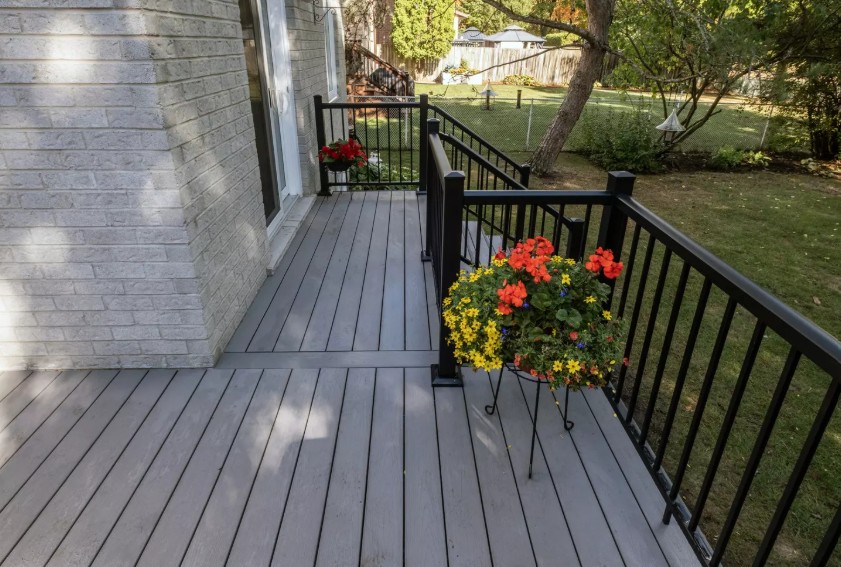
Urban decks benefit from low-maintenance materials like composite decking that don’t require the upkeep of traditional wood. These decks are resistant to moisture penetration helping to prevent rot, cracking, insects and mold and have warranties of 25 years plus.
Rural Properties: Designing With Space and Nature
Homes outside the city core typically have more space to work allowing for larger deck designs with designated zones for dining, relaxing and entertaining. However, building a deck in these areas comes with other considerations. As these properties aren’t sheltered by nearby structures or tree canopies, rural decks often need to handle full exposure to the elements – full sun, wind and large snow loads. Composite decking is still a strong choice for rural decks as these materials are designed to resist fading, cracking, and moisture damage.
You may also want to consider the deck’s connection to the landscape.
- Glass railings to preserve views
- Gradual transitions from the deck to the yard with steps or pathways
- Shade structures such as pergolas, pavilions or gazebos
Waterfront Homes: Built for Views and Weather
Living near the water in Kingston is hard to beat—but it does come with its own set of challenges when it comes to deck design. Moisture, wind, and temperature fluctuations can all impact your materials over time, so durability is key.
Waterfront decks benefit most from high-performance, moisture-resistant materials such as composite or PVC decking. Composite decking is made of a mix of wood fibres and plastic while PVC contains no organic fibres. These low-maintenance decking options stand up well to humidity, won’t rot and require far less maintenance than wood.
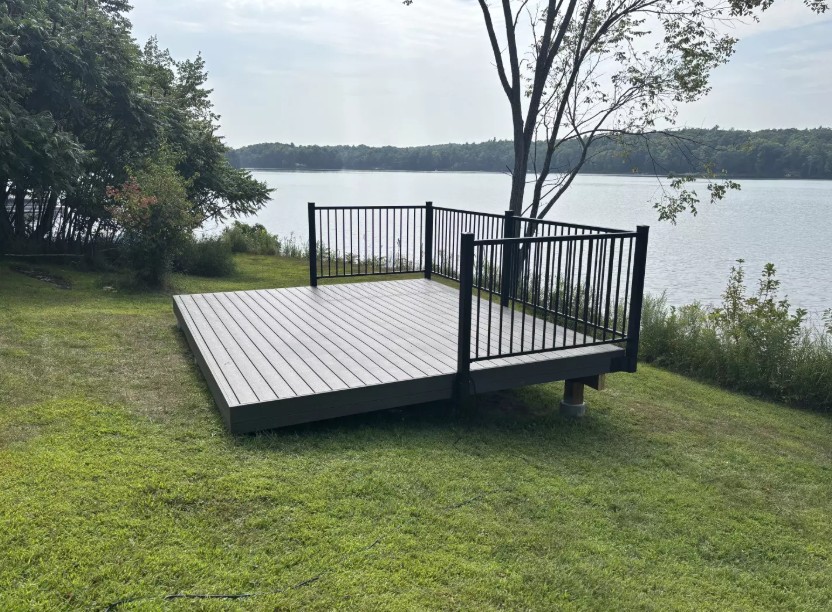
This freestanding waterfront deck, built with TruNorth composite decking in Ash Grey, creates a stylish, low-maintenance space perfect for relaxing by the water.
Design Details That Work Anywhere
No matter your property type, a few design elements can elevate your deck and make it more enjoyable:
- Lighting for safety and ambiance
- Built-in seating for functionality
- Pergolas or covered areas for shade and weather protection
There’s no one-size-fits-all deck design in a place like Kingston. Whether you’re working with a compact urban yard, a sprawling rural property, or a beautiful waterfront lot, the best deck is one that’s designed specifically for your space, your environment, and your lifestyle.
With the right approach, your deck can become more than just an outdoor feature—it can be one of the most used and enjoyed parts of your home.