
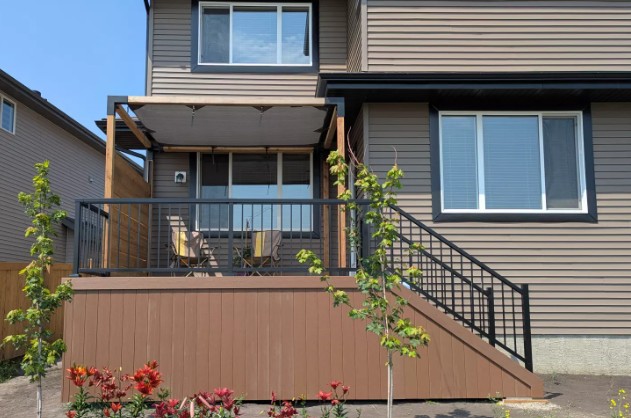
Beating the Alberta Freeze-Thaw: Why Composite Decking Outperforms Wood in Red Deer
Alberta weather is tough on decks. Snow, ice, freezing temperatures, spring melt, and constant freeze-thaw cycles can quickly wear down outdoor living spaces.
When building a new deck, choosing the right material matters—especially if you’re considering composite decking in Red Deer. While wood has long been a traditional option, composite and PVC decking are better designed to handle Central Alberta’s harsh weather, moisture, and freeze-thaw conditions.
Why Freeze-Thaw Cycles Are So Hard on Decks
Freeze-thaw damage happens when moisture enters a material, freezes, expands, and melts again as temperatures rise. In Alberta, this cycle can repeat many times through winter and spring, slowly breaking down deck boards.
Even small amounts of moisture can cause damage when trapped inside porous materials like wood. In Red Deer and Central Alberta, snow buildup, spring meltwater, rain, frost, and dry summer heat make traditional lumber especially vulnerable.
How Wood Decking Reacts to Red Deer Weather
Wood expands, contracts, and absorbs moisture. Even pressure-treated lumber can take in water over time, especially as stains, sealants, and protective coatings begin to wear down. Over multiple seasons, this can lead to:
- Cracking and splitting boards
- Warping or cupping
- Surface checking
- Splinters
- Rot or soft spots
- Loose fasteners
- More frequent maintenance and board replacement
While many homeowners still love the natural look of wood decking, sanding, staining, sealing, and replacing damaged boards become a regular part of wood deck ownership.
Why Composite and PVC Decking Perform Better
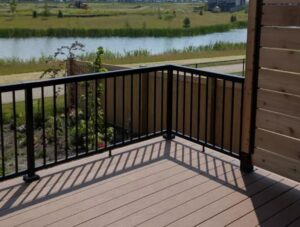
Composite decking is made from a blend of recycled plastic and typically wood fibres, although some composite decking is made with rice hulls or bamboo fibres. PVC decking is made entirely from synthetic materials. Both are engineered to resist moisture far better than traditional wood.
Because composite and PVC decking absorb much less water, they are less affected by freeze-thaw movement. This helps reduce the risk of cracking, splintering, and warping caused by trapped moisture.
For homeowners considering composite decking in Red Deer, that means a deck that is built to handle Alberta’s changing seasons with less upkeep and fewer long-term repairs.
Lower Maintenance Means Long-Term Savings
Wood decking may cost less upfront, but ongoing maintenance can add up. Regular staining, sealing, sanding, repairs, and board replacement all take time – and money.
Composite and PVC decking need far less upkeep, often just a simple soap-and-water wash. Over the life of the deck, that can save homeowners time, money, and stress.
Built for Alberta’s Four-Season Lifestyle
A Red Deer deck needs to handle snow, ice, spring thaw, rain, dry heat, and everything in between. Composite and PVC decking offer a beautiful, low-maintenance option with the durability needed for Alberta’s climate.
Choosing the Right Decking for Your Central Alberta Home
When it comes to long-term performance in Alberta’s freeze-thaw conditions, composite and PVC decking have clear advantages. For homeowners in Central Alberta, choosing low-maintenance decking is not just about convenience. It is about building a deck that will continue to perform for years to come.
If you are planning a new deck or replacing an older wood deck, contact your local Hickory Dickory Decks builder to learn more about composite and PVC decking options built for Alberta weather.